

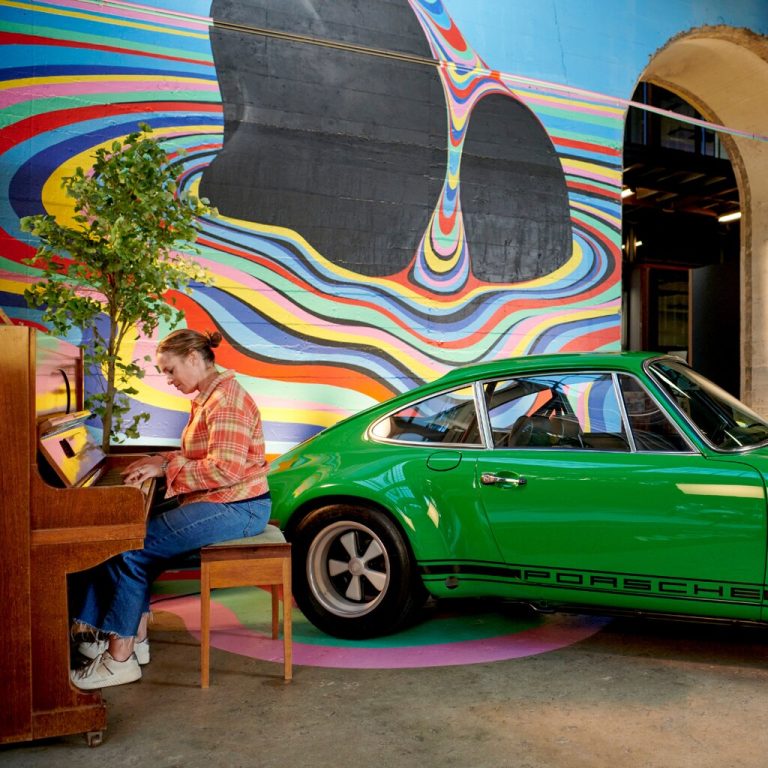
Bars, dogs and interactive spaces are increasingly growing across Australian offices, but new research suggests it still isn’t enough to convince some workers to ditch the couch and return to the workplace.
New Exclusive Finder research has found just one in three Australian employees (33 per cent) say fun or interactive office features, such as a bar, games room or allowing pets, would make them more likely to come into work.
Almost half (42 per cent) say the perks would not sway their preference, with 30 per cent saying they would make no difference to whether they worked from home or in the office.
Another 12 per cent said the perks would actually make them more likely to want to work from home.
A further 24 per cent of employees said the question did not apply to them because their jobs were already fully remote or entirely office-based.
With findings suggesting businesses may have to offer more than ping-pong tables and free coffee to win back workers in the post-pandemic era.
Finder personal finance expert Sarah Megginson said while workplace perks could appeal to some employees, they were far from a universal solution.
Source: Finder
“A lot of businesses might assume that if you make the office ‘fun’ enough, people will want to come in more often,” Ms Megginson said.
“Our research shows that’s true for about a third of workers.
“But it’s not a one-size-fits-all fix.”
Men were slightly more receptive to office perks, with 36 per cent saying they would be more likely to come into work, compared with 30 per cent of women.
Younger workers were also significantly more likely to be tempted.
Almost half of millennials (45 per cent) said interactive office features would make them more likely to come in, compared with 40 per cent of Gen Z and just 17 per cent of Gen X.
The potential of a more entertaining workplace was also no guarantee workers will be more productive.
More than one in three employees (35 per cent) said fun or interactive office features would make them more productive, while 28 per cent said they would make no difference.
One in four (25 per cent) believed the features would actually make them less productive.
Younger workers were again more optimistic, with 43 per cent of millennials and 41 per cent of Gen Z saying the perks would boost their productivity, compared with just 23 per cent of Gen X.
MORE: Famous country pub goes up for sale

Source: Finder
Gen Z was also the generation most likely to say the perks could backfire, with 27 per cent believing a fun office would make them less productive.
Ms Megginson said employers should not assume every worker had the same idea of a good workplace.
“One person’s dream day of petting dogs and playing ping-pong during their breaks could be another person’s idea of a noisy, distracted workplace that prevents them from getting their work done,” she said.
“Office sweeteners can absolutely play a role in getting people back into the office and keeping your staff engaged, but the best perk in the office is often being compensated fairly and working with supportive colleagues.”
The findings come as commercial landlords and office operators increasingly turn to hospitality, wellness and entertainment to make workplaces more appealing.
Ray White Head of Research Vanessa Rader said office owners and tenants were getting increasingly creative in an effort to encourage workers back into buildings.
MORE: ‘Danger’: Aus told to get rid of home item now

Pet-friendly workplaces are becoming more prominent
Pet-friendly workplaces are also becoming more prominent, Ms Rader said with 68.7 per cent of Australian households now owning a pet, up from 61 per cent three years ago.
Ms Rader said increased pet ownership and the close bond many Australians developed with their animals during lockdowns had contributed to anxiety around returning to the office full-time.
Meanwhile, CBD office buildings are increasingly offering facilities that would once have been considered unusual workplace extras, including basketball half-courts, squash courts and virtual golf.
“Recently we have seen a number of building owners get creative with facilities in their building, no longer are bike racks, end of trip facilities and lobby cafes enough to satisfy occupiers,” she said.
“Sporting facilities such as basketball half courts, squash courts, virtual golf have started to emerge in Sydney CBD office buildings, used to entice new tenants into their building.”
MORE: Shock income test exposes brutal tenant reality

WorkInc office Sydney. Picture: Supplied

WorkInc Office in Sydney. Picture: Supplied
The shift reflects a broader change in what employees expect from their workplace, more offices increasingly borrowing design cues from luxury hotels.
According to workplace expert Brett McAllen CEO of @WORKSPACES, colour, lighting, texture, greenery and hotel-style communal areas are becoming critical elements of modern workplace design.
“The office has changed dramatically. People don’t want to leave the comfort of home to sit under harsh fluorescent lights in a bland corporate box,” he said.
“When people know they can work from home, the workplace has to offer something better than simply a desk and internet connection.
“The office now has to earn the commute.”
Mark Davidson Founder of Work Inc said when he first stumbled upon the now office space it was an abandoned Bay 10 warehouse under Sydney’s Harbour Arch, leaky and forgotten, but he saw incredible potential.

Pinterest office in Sydney collaboration area. Picture: Supplied
“We weren’t just building offices; we were building a community, creating a space where the grit of Sydney’s industrial heritage could inspire the next generation of innovators,” he said. “Every beam, every wall, tells a story and we’ve woven that narrative into a functional, beautiful environment designed to foster success.”
Gensler Design Director Cathy Jameson said Pinterest’s first Sydney office was conceived as a living Pinterest board: a vibrant, flexible space for teams, creators and partners.
“It’s a hub to work, play and be inspired, and that’s the point: when a workplace is this experiential, it does the cultural work of bringing people together,” she said.
“Our 2025 Global Workplace Survey found just 14 per cent of workers want a traditional corporate environment; most are after spaces that feel creative, restorative and a little like home.”