

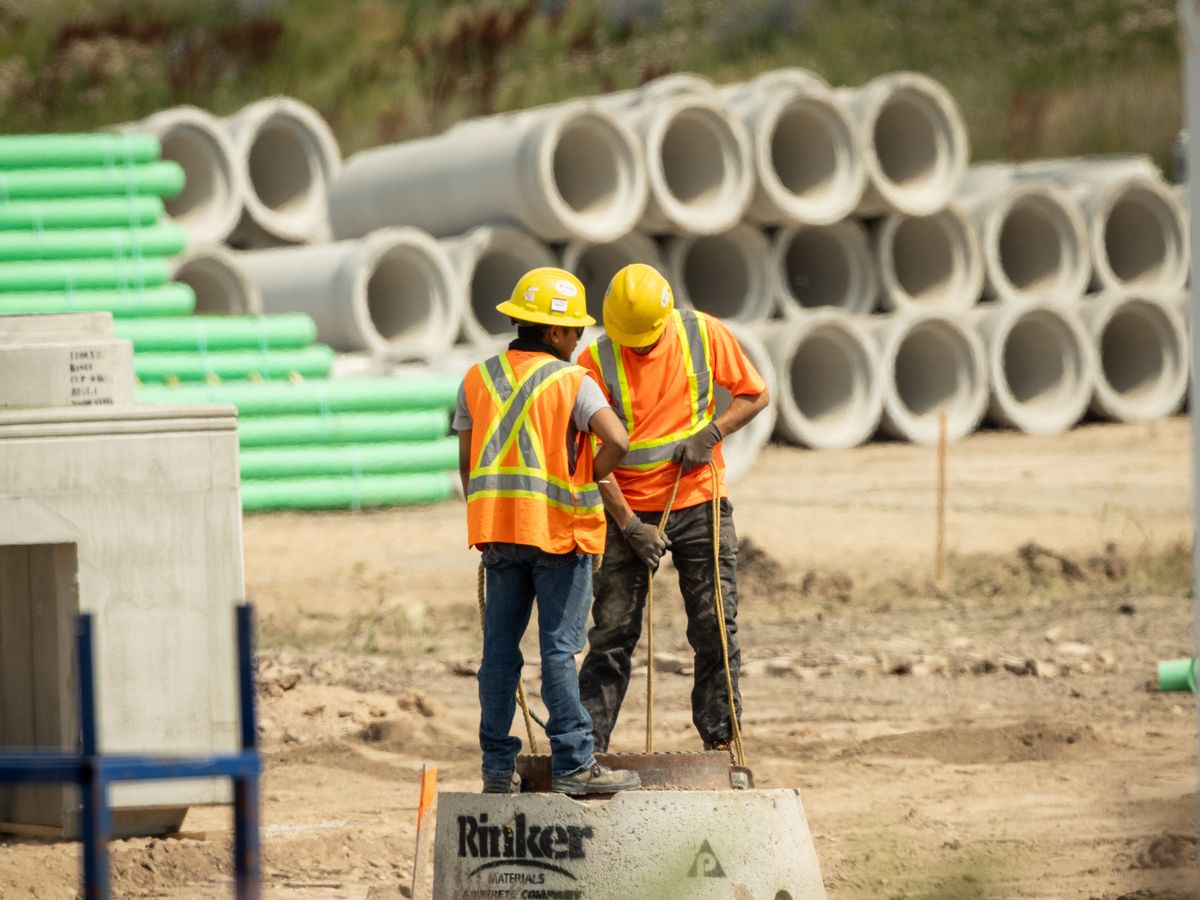
Canada’s housing push is running up against a basic problem: some communities’ water and sewer systems just can’t handle all the growth governments want.
Municipalities and developers are confronting wastewater plants nearing capacity, sewers that need expansion and aging water systems that already require billions of dollars in investment. The result is that developments are being delayed, phased or stopped even though provincial and federal governments are pushing cities to approve housing faster.
More than 11 per cent of Canada’s water and wastewater-related infrastructure was in poor or very poor condition in 2022, representing an estimated $107 billion in replacement value, according to the 2025 National Infrastructure Assessment.
Tim Tierney, president of the Federation of Canadian Municipalities , which represents more than 2,200 municipalities, said water and wastewater infrastructure ranks at the top of the obstacles his members face.
“Top. Top. Top,” he said. “ It’s infrastructure, infrastructure, infrastructure .”
Governments can accelerate approvals and set ambitious construction targets , but the pipes, treatment plants and other infrastructure needed to service that growth can cost billions of dollars and take years to plan and build, he said.
That tension is playing out in Winnipeg.
The city’s North End Sewage Treatment Plant is undergoing a multibillion-dollar upgrade, but the existing system only has about four years of additional capacity remaining. The plant has enough capacity to serve about 40,000 more people, although new industrial development could use up some of that capacity.
The problem is timing, according to Lanny McInnes, chief executive of the Manitoba Home Builders’ Association. Parts of the plant’s upgrade are already coming online, but the work needed to expand its wastewater capacity is not expected to be completed until 2032.
McInnes said Winnipeg is getting dangerously close to running out of room.
“We’re flashing the signal that we’re getting very, very close to reaching that point,” he said, adding that if that happens, “we will not be able to build any new housing.”
McInnes said development has effectively been restricted in some municipalities surrounding Winnipeg, including East St. Paul, because of limited wastewater capacity, so much so that some builders have finished one phase of development, but can’t move on to the next.
Similar constraints are appearing in different forms elsewhere.
Tierney pointed to infrastructure delays affecting Toronto’s Black Creek trunk sewer, which is associated with the development of about 63,000 homes. Waterloo Region in Ontario now requires developers to compete for limited wastewater capacity before their projects can move ahead.
North of Calgary, rapid growth is forcing the city of Airdrie to decide how its remaining servicing capacity should be used.
Airdrie is already using about 97 per cent of the water and wastewater capacity allocated to it by Calgary for 2026. The city has said that if housing continues to grow faster than other developments, there may not be enough capacity left for major employers, schools, health care facilities and other essential services.
Airdrie is now developing a system to decide who gets access to the remaining capacity. Schools, health care and emergency services would get first priority, followed by industrial and commercial development and major employers. Housing would rank third.
At the same time, work is moving ahead on a $114-million wastewater pipeline expansion connecting Airdrie to Calgary’s treatment system, which the province said could support up to 45,000 new homes.
Aime Blanchette, chief executive of BILD Calgary Region, said housing construction and infrastructure investment need to remain synchronized. She isn’t aware of an area in Calgary itself where development is currently on hold solely because of water and wastewater capacity, but said the issue needs to be viewed regionally.
“This isn’t just about the City of Calgary,” she said. “This is about the city, its surrounding municipalities, understanding where growth is and how to accommodate it.”
Tierney said many municipalities under intense pressure to accelerate approvals and accommodate more housing have responded only to encounter a constraint that can’t be eliminated by simply changing a zoning bylaw or speeding up an approval.
“We’ve sped up our processes,” he said. “But now we can’t get the infrastructure.”
Robert Haller, executive director of the Canadian Water and Wastewater Association, said the housing push is arriving at an awkward time for municipal water systems.
He said many communities already face substantial repair and replacement issues for the infrastructure serving their existing populations.
“We’re starting behind, regardless of new housing. Yet we’re throwing that on top of an existing system that’s failing,” he said. “We need to make sure we have a solid existing system before we can add too much onto it,” Haller said.
Finding the money needed creates another problem since supporting each new home requires an average of about $107,000 in municipally owned capital assets, including roughly $39,000 in potable water and wastewater infrastructure, according to a Federation of Canadian Municipalities estimate in 2023. The actual cost varies significantly depending on the type and location of development.
Municipalities have traditionally partly relied on development charges to finance infrastructure required by new growth. Those charges allow some of the cost of new sewers, water systems and roads to be incorporated into the cost of new development rather than being borne entirely by existing property taxpayers and utility customers.
But development charges have come under scrutiny as governments look for ways to reduce the cost of new housing.
Haller said eliminating or reducing those charges doesn’t eliminate the infrastructure cost.
“So, who’s going to pay upfront for the water and sewer?” he said.
Tierney said if governments want municipalities to reduce development charges while simultaneously accommodating much more housing, another source of infrastructure financing has to replace the lost revenue.
“Somebody pays at the end of the day,” he said.
Ottawa has responded with billions of dollars for housing-related infrastructure, including the $6-billion Canada Housing Infrastructure Fund and the $51-billion, 10-year Build Communities Strong Fund.
But some of that funding comes with conditions aimed at reducing development charges, one of the tools municipalities use to pay for infrastructure required by growth.
Municipalities also say the way infrastructure is financed makes long-term planning difficult.
Haller said communities often rely on competitive federal and provincial programs that open periodically, rather than predictable funding they can incorporate into long-term capital plans.
As a result, smaller municipalities can find themselves at a particular disadvantage because they may lack the money and engineering staff required to prepare projects before funding becomes available.
For example, Moose Jaw, Sask., is seeking funding for a $70-million lift station project needed to expand storm and sewer capacity, but the project has twice been rejected for funding through the Canada Housing Infrastructure Fund.
Haller said predictable funding over 10 or 20 years would allow municipalities to plan infrastructure investments around expected population and housing growth rather than repeatedly competing for individual programs.
Long-term planning can also extend beyond municipal boundaries. McInnes said communities south of Winnipeg have worked together on water and wastewater infrastructure rather than building separate systems, an approach that has helped support significant development.
Haller said cities can reduce costs by building more housing in existing neighbourhoods, where water and sewer systems are already in place, but even that can require expensive upgrades if existing pipes and treatment systems lack the required capacity.
The problem for many, though, is that the governments’ housing ambitions increasingly depend on infrastructure most people will never see and don’t want to pay for.
“We’re not looking for community centres,” Tierney said. “Those are all great things. But we want the non-sexy underground stuff.”
• Email: arankin@postmedia.com