

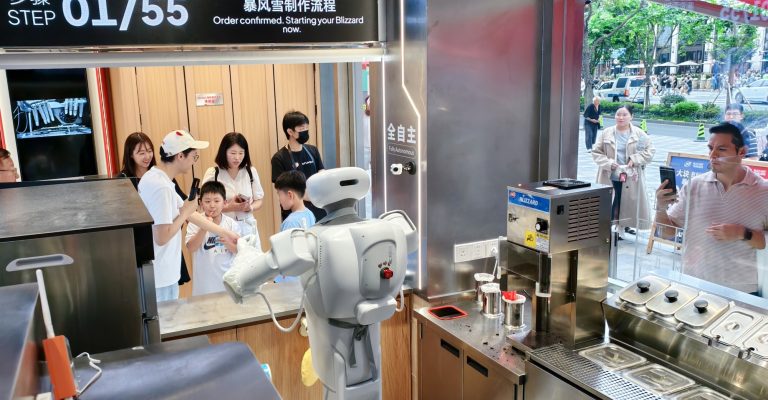
In the 1960s, science fiction asked whether androids dream of electric sheep. For quick service retail (QSR) operators in 2026, the question is more practical: can AI take your order, answer customer enquiries or streamline work behind the counter?
Drive-throughs are already putting that question to the test. Hungry Jack’s is trialling an AI assistant called Jacki, while KFC has tested similar voice ordering technology at five Sydney locations.
The potential benefits go beyond cutting down ordering times. Titanium Food director Suzee Brain points to self-order kiosks, which she says have increased average transaction values through automated upselling.
Hungry Jack’s is trialling a new AI assistant called Jacki.
“I expect the same results will show up in AI assisted drive-through ordering,” Ms Brain told realcommercial.com.au, predicting a rapid rollout across quick-service restaurants.
Pauline Pangan, CEO of Xenai Digital, a consultancy firm that works with Craveable Brands, also expects automated ordering to become more common, though pace of adoption is difficult to predict.
“The technology is evolving so quickly that what we’re discussing today may look quite different in a few years. I’m optimistic about it, though. I think the opportunity is much bigger than simply automating the person taking the order.”
McDonald’s is already taking the concept of AI ordering to the next level.
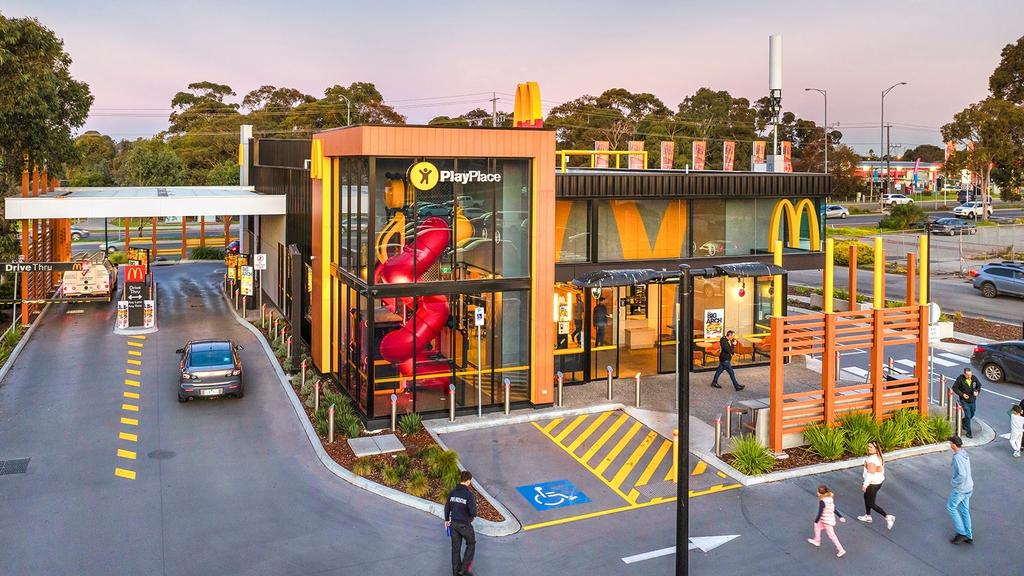
Overseas, McDonald’s is trialling AI-led voice ordering to streamline pickups.
Last year, the fast-food giant launched its first in-car AI voice ordering intelligent system in China. The technology uses a customer’s location to identify a restaurant along their route, take payment, and time the order’s preparation for their arrival. It can also personalise recommendations based on what it knows about the customer.
“This is where it gets interesting for QSRs,” Ms Pangan said. “Voice ordering may improve speed and reduce some of the pressure on staff, but AI could also improve personalisation, order accuracy, upselling, even how restaurants manage operations behind the scenes.”
With the help of Xenai Digital, El Jannah is putting that approach into practice, using AI to answer routine customer enquiries across WhatsApp, Meta, its mobile app and website.
“Since launching, around 84% of their WhatsApp enquiries have been resolved entirely by AI. That’s a significant volume of customer interactions being handled without adding equivalent demand to the support team, reducing pressure on phone support and creating more capacity for people to focus on interactions that genuinely need human judgement,” Ms Pangan said.

El Jannah uses AI to deliver customer service solutions.
She sees a further opportunity in the information those conversations generate.
“As AI captures more data and context from customer interactions, brands can use that intelligence to make loyalty and personalisation more relevant, improve how they engage customers and get more value from each interaction. Over time, those effects can compound. Better data creates better context, which enables better experiences and, ultimately, more value for the business”
Titanium Food director Suzee Brain also sees a role for automation, provided staff are there when customers need them.
“Customers don’t necessarily need a human to ask whether they want fries with that, but they absolutely want one when something has gone wrong,” she said. “The smartest QSR operators won’t automate humanity out of the business; they’ll use automation to deploy it where it matters most.”

Experts say McDonald’s self-service kiosks have aided in boosting sales for the fast food giant. Picture: Getty
Technology in the kitchen, people on the food line
At Guzman y Gomez, technology is being developed to help staff manage the flow of orders through its kitchens.
The chain is preparing to trial a feature that gives customers a pickup time based on what they have ordered and how busy the kitchen is. It accounts for changes to individual meals, whether a customer adds guacamole, switches beans or leaves off the sour cream.
Due to launch in October, the feature is part of GYG’s Order Management System, which completed a pilot in August 2026 and now operates in more than 250 kitchens.
GYG is also developing an AI platform that could let kitchen staff manage tasks using everyday language.
“We want to automate as much as we can and be pre-emptive around where technology can take action on behalf of our crew or a manager,” said chief technology officer Bryce Maybury.

GYG uses AI to optimise its restocking operations but its executives say humans saying ‘Hola’ are here to stay.
“For instance, if we ran out of 390ml bottles of Coke during a busy lunch service, instead of having to manually log that into our system, what if they could just make a voice command to turn it off? It doesn’t interrupt the workflow in the kitchen.”
But could automation go as far as a robot wrapping a burrito?
“No, we’re not looking into robotics,” Mr Maybury said. “We’re proud of our food and the staff who make it. We don’t have kiosks and we don’t have AI drive-throughs. We love the pageantry of our restaurants, and we believe food for people should be prepared by people.”
The entry-level conundrum
While GYG is committed to keep humans preparing its food, the industry’s wider shift towards automation raises a question about the jobs that bring young people into the workforce.

Young people rely on fast food for their first jobs and would be disproportionately affected by any advancements in AI ordering. Picture: Getty
Futurist Morris Misel says the human interaction at the counter or drive-through window has value that is easy to overlook.
“The service window is one of the few places where customers still deal directly with a person. A machine takes what you said, but a person notices what you mean,” he said. “That the order’s wrong before you’ve mentioned it, that you’re in a hurry, or that you’re not. It’s a small thing, but people remember it.”
The stakes extend beyond customer service. According to 2023 figures cited by the Australian Hotels Association, 48% of people employed in accommodation and food services were aged 15 to 24, compared with 15% across other industries.
Misel says a first fast-food job teaches young people to turn up on time, work with others and take responsibility for an order while a customer is waiting.
“Strip out the routine tasks and the entry-level job goes with them,” he said. “The real question is where tomorrow’s first jobs come from when the routine tasks they’re made of are being handed to machines.”
The latest commercial property news
Get the latest news and insights straight to you.