

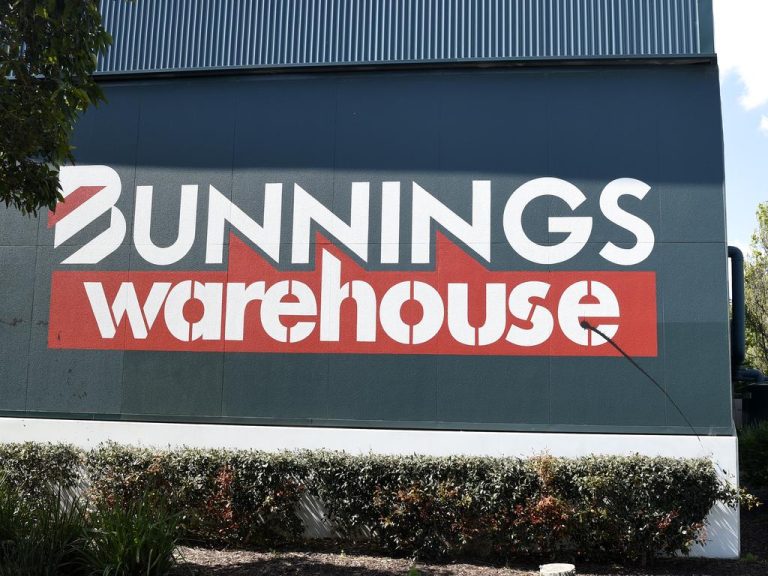
A Bunnings Warehouse property in Victoria generates about $1.38m in annual net income, equivalent to more than $26,500 a week for its landlord. Picture: NewsWire / Andrew Henshaw
A Bunnings landlord is pocketing about $26,500 a week as an analysis reveals the extraordinary property income behind some of Australia’s biggest brands.
But experts warn the eye-watering rent cheques can disguise what actually makes a branded commercial property a good investment.
Individual properties leased to household names including Coles, Woolworths, Officeworks, 7-Eleven, Guzman y Gomez and McDonald’s are generating landlords thousands of dollars each week.
RELATED: Award-winning Melb home could fetch $5.7m
Warning: If you get this email, it’ll cost you $80k
Revealed: where to see Melb’s best events free
The examples are individual Australian properties rather than average rents across each company’s network, with vastly different building sizes, landholdings and lease structures.
BUNNINGS: ABOUT $26,538 A WEEK

The Traralgon Bunnings Warehouse is secured by a new 10-year net lease and generates the biggest weekly income of the branded properties examined.
The Bunnings Warehouse at Traralgon in regional Victoria generates estimated net income of $1.38m a year.
That equates to about $26,538 every week.
Or, at $3.50 a snag, the equivalent price of more than 7500 Bunnings sausage sizzle sausages every week.
The 10,438sq m Bunnings Warehouse sits on a 2.026ha site and is secured by a new 10-year net lease.
The enormous headline income, however, does not automatically make it the best investment on this list.
COLES: ABOUT $15,197 A WEEK

A freestanding Coles supermarket at Warrnambool generates $790,226 in annual net income, or about $15,197 a week.
A freestanding Coles supermarket at Warrnambool generates net income of $790,226 a year.
That works out to about $15,197 a week.
The 2670sq m supermarket has an extended lease running to August 2038, with further options potentially extending Coles’ occupancy to 2068.
OFFICEWORKS: ABOUT $15,074 A WEEK

An Officeworks property at Browns Plains generates about $15,074 a week in net income, putting it surprisingly close to the Coles example.
An Officeworks property at Browns Plains, south of Brisbane, generates $783,830 in annual net income.
That equates to about $15,074 a week, putting the office supplies giant surprisingly close to the Coles example.
The large-format retail property sold for $12.1m earlier this year and is secured by a renewed lease with options extending to 2044 and fixed 3 per cent annual rent rises.
WOOLWORTHS: ABOUT $10,092 A WEEK

A Woolworths Metro and BWS property at Caulfield North generates $524,769 in annual net income, equivalent to about $10,092 a week.
A Woolworths Metro and BWS property at Caulfield North generates $524,769 a year in net income.
That is about $10,092 every week.
The 1042sq m property is secured by a Woolworths lease running to 2035, with further options extending to 2055.
But investors looking at numbers such as these do not simply rank properties according to which landlord receives the biggest cheque.
Vanta Advisory co-founder and ALBA Commercial partner Jeremy Daunay said the size of the rent was only one part of the equation.
For a Bunnings property, he would examine the amount of available land surrounding the site and whether the retailer could feasibly move elsewhere when its lease was renegotiated.
A landlocked Bunnings could give its landlord greater leverage than one with another suitable development site next door.
Mr Daunay said household-name tenants could also command a premium from investors seeking long-term capital preservation and stable income.

Vanta Advisory co-founder and ALBA Commercial partner Jeremy Daunay warned a famous tenant and huge rent cheque did not automatically make a property the best investment.
But he warned buyers could overpay if they were seduced by the famous name without investigating the underlying property.
Lease structure, land value, remaining lease term, tenant covenant, rent per square metre and future opportunities all mattered.
Recoverable outgoings could also radically alter what the headline rent was actually worth to a landlord.
Mr Daunay said a property collecting $100 of rent but costing its owner $15 to operate represented a very different proposition to one where those costs were recoverable from the tenant.
“The biggest risk” was focusing on one attractive part of the investment while overlooking its fundamentals.
“A mistake in commercial real estate compounds year on year,” Mr Daunay said.
ZONE BOWLING: ABOUT $6485 A WEEK

Zone Bowling Frankston generates an estimated $337,198 a year, but its $139sq m passing rent has been described as below the property’s longer-term potential.
A Zone Bowling property at Frankston generates estimated net income of $337,198 a year, or about $6485 a week.
The 2500sq m building occupies a 5142sq m site at 228 Cranbourne Rd and is leased to entertainment operator TEEG.
Its current term runs to June 2029, with a five-year option to 2034 and fixed 3.5 per cent annual rent increases.

Zone Bowling Frankston sits on a 5142sq m site with 70 car spaces, giving the property potential for future retail, medical or other commercial uses. Site picture of Zone Bowling Moorabbin.
Yet despite collecting more than $337,000 a year, JLL senior executive Romanor Falconer said its passing rent of about $139sq m was low for a retail tenancy.
That creates a very different investment proposition to simply chasing the largest current income.
Mr Falconer said the site’s substantial parking, exposure and existing building could potentially support large-format retail, medical, allied health, childcare or other commercial uses after the existing lease period.

JLL senior executive Romanor Falconer said Zone Bowling Frankston’s existing rent left scope for substantial upside if the property was eventually repositioned.
He said the opportunity was in the potential rental upside available if the property was eventually repositioned.
7-ELEVEN: ABOUT $6308 A WEEK

A 7-Eleven property at South Morang generates about $6308 a week in estimated net income and includes more than 1200sq m of under-utilised land.
A 7-Eleven property at South Morang generates estimated net income of $328,020 a year.
That is about $6308 a week.
The 3665sq m property has a net lease, minimum 3 per cent annual rental increases and more than 1200sq m of under-utilised land flagged for potential future development, subject to approval.
GUZMAN Y GOMEZ: $6250 A WEEK

A Guzman y Gomez drive-through at Cranebrook generates $325,000 in annual net income under a 20-year lease running to 2046.
A new Guzman y Gomez drive-through at Cranebrook in western Sydney generates net income of $325,000 a year.
That is exactly $6250 a week.
It has a 20-year net lease running to 2046 plus options to 2066 and fixed 3 per cent annual rent increases.
GYG is also responsible for usual property outgoings under the lease.
CHEMIST WAREHOUSE: ABOUT $5272 A WEEK

The freehold beneath a Chemist Warehouse on Chapel St generates about $5272 a week, with fixed 3 per cent annual rent increases.
A Chemist Warehouse property on Chapel St at Prahran generates passing rent of $274,158.94 a year.
That works out to about $5272 a week.
The property is fully leased to the pharmacy giant, with fixed 3 per cent annual increases and further lease options extending to 2034.
EL JANNAH: ABOUT $4712 A WEEK

An El Jannah property at Box Hill generates about $4712 a week and recently sold for $4.55m after attracting more than 230 inquiries.
An El Jannah restaurant at Box Hill generates estimated net income of $245,000 a year, equivalent to about $4712 a week.
The property sold under the hammer for $4.55m this month after attracting more than 230 inquiries.
It is secured by a 20-year net lease running to 2046.
But ALBA director Tom Mifsud warned the enormous income attached to properties occupied by familiar brands could give ordinary investors a false sense of simplicity.

ALBA director Tom Mifsud warned investors against being seduced by the headline income without understanding the land, lease and tenant underneath it.
Mr Mifsud said access, passing traffic, the quality of the underlying land, the tenant’s operation and the lease all needed to be scrutinised.
Household-name businesses could occupy valuable blue-chip commercial land, but investors still needed the capital and expertise to hold and manage the asset over the longer term.
Seeing a Bunnings landlord collect more than $26,000 a week was therefore not an invitation to simply chase the biggest number.
“Commercial is a whole different language, and if you have no idea about commercial, and you just like the numbers, you shouldn’t be buying it,” Mr Mifsud said.
McDONALD’S: ABOUT $2526 A WEEK

A McDonald’s property at Hampton Park generates about $2526 a week, less than one-tenth of the weekly income produced by the Bunnings example.
Even one of the world’s most recognisable brands does not necessarily produce the biggest rent cheque.
A McDonald’s property at Hampton Park generates passing rent of $131,328 a year.
That equates to about $2526 a week.
The 2056sq m property has a 20-year triple-net lease, fixed annual rent rises and makes the tenant responsible for property outgoings including land tax.
It means the Bunnings example generates about 10.5 times the weekly property income of the McDonald’s site.
But the experts said that comparison also demonstrated why the biggest number alone could be misleading.
Different building sizes, land values, locations, lease structures and opportunities meant the famous logo above the door was only the beginning of determining what the property underneath it was really worth.
Sign up to the Herald Sun Weekly Real Estate Update. Click here to get the latest Victorian property market news delivered direct to your inbox.
MORE: ‘Challenging’: Vic buyers face tough spring market
Tones and I star’s huge secret money blow
Sad blow for Block stars in Ch9’s failed act
david.bonaddio@news.com.au