



Trimming development fees would make dozens of housing projects across the country more economically viable in a time when Canada looks to seriously boost construction, says the nation’s housing agency.
Development charges, which municipalities levy on housing developers to pay for the new infrastructure such as roads, water and transit needed for these projects, are especially popular in Ontario and British Columbia and can vary greatly.
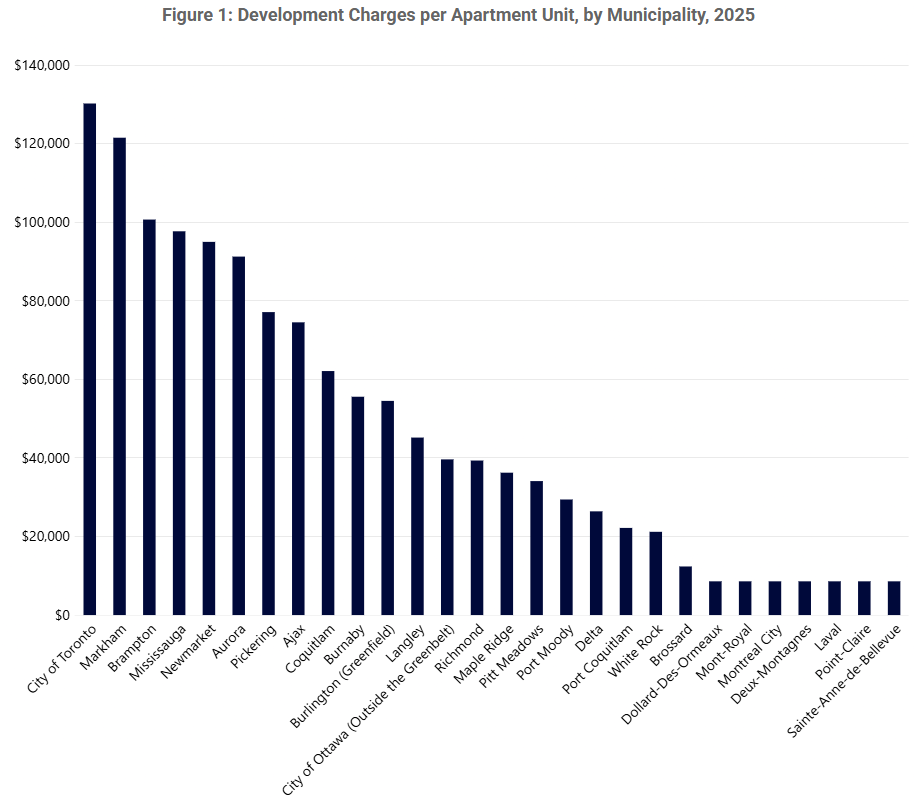
For example, a two-bedroom apartment in Ottawa commands development charges of $39,600 while Markham takes $121,500, according to data from Canada Mortgage and Housing Corp. (CMHC).
Given that the average new build was 55 units in Ottawa in 2024 and 246 units in Markham, a developer could be on the hook for $2.2 million and $29.9 million, respectively, in upfront fees for a build.
As a result, developers face a real hurdle in getting their projects off the ground.
But cutting the charges in half would boost the number of viable projects by about five per cent in Toronto and Vancouver, according to CMHC. An all-out cut would boost that figure to about 10 per cent.
“Reducing development charges can improve housing project viability, especially in communities where they are highest, but meaningful gains in supply require substantial reductions and they are only one part of the solution,” Mathieu Laberge, CMHC’s chief economist, said in a release .
“Improving affordability will require a broader approach, including improved land-use regulation and increased scale and innovation to boost productivity in the construction industry.”
On top of stalling projects, development charges also hurt housing affordability.
CMHC said development charges are passed down to homebuyers and that the price increases are often larger than the development fees themselves. The higher prices on new builds can also drive up prices for existing homes on the market.
High development charges, however, can be a bit of a double-edged sword since they can drive down prices of vacant land and help alleviate property taxes.
CMHC estimates Canada needs to double its annual housing starts to between 430,000 and 480,000 new units by 2035 to meet demand.
As of April, Canada was on pace for 256,777 housing starts in 2026.
Sign up here to get Posthaste delivered straight to your inbox.


Professional stock pickers are having a hard time gaining an edge as Big Tech strengthens its grip on the stock market.
Only about 20 per cent of stock pickers have outperfromed the S&P 500 this year, according to Strategas Securities, which marks the worst performance since 2021.
IPO debuts of SpaceX, Anthropic PBC and OpenAI are expected to magnify the concentration at the top.
The S&P 500 is up 16 per cent this quarter.
Read more here.

- Today’s Data: Canada and U.S. employment reports for May



- Canada’s new AI plan commits billions for AI adoption, new jobs and skills training
- Garry Marr: The revenge of the defined contribution pension plan
- When it comes to the U.S., the first negotiation is not the one that matters most
- Why adding adult children as joint owners can create more problems than it solves

Opening a joint account with adult children may seem like a simple way to avoid probate fees or the delays of inheritance pay outs, but there are risks.
Ida Khajadourian of Richardson Wealth explains how joint ownership, often intended as a simple estate-planning shortcut, can create serious tax, legal, and family consequences if not structured properly.
Read more here.
 Interested in energy? The subscriber-only FP West: Energy Insider newsletter brings you exclusive reporting and in-depth analysis on one of the country’s most important sectors. Sign up here.
McLister on mortgages
Want to learn more about mortgages? Mortgage strategist Robert McLister’s Financial Post column can help navigate the complex sector, from the latest trends to financing opportunities you won’t want to miss. Plus check his mortgage rate page for Canada’s lowest national mortgage rates, updated daily.
Financial Post on YouTube
Visit the Financial Post’s YouTube channel for interviews with Canada’s leading experts in business, economics, housing, the energy sector and more.
Today’s Posthaste was written by Ben Cousins with additional reporting from Financial Post staff and Bloomberg.
Have a story idea, pitch, embargoed report, or a suggestion for this newsletter? Email us at posthaste@postmedia.com .
Bookmark our website and support our journalism: Don’t miss the business news you need to know — add financialpost.com to your bookmarks and sign up for our newsletters here